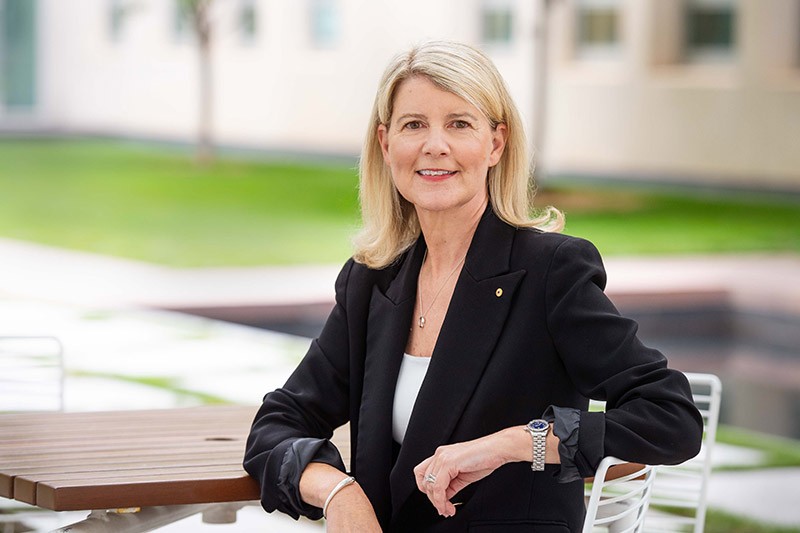
Australia seeks your support for the re-election of Natasha Stott Despoja AO to the Committee on the Elimination of Discrimination against Women
Advancing the status of women around the world
The Australian Government is proud to endorse Natasha Stott Despoja AO for re-election to the CEDAW Committee.
IPAA Annual Address to the Australian Public Service 2023
Please allow me to also acknowledge the Ngunnawal people as traditional custodians of these unceded lands and recognise the many Aboriginal people with connection to the lands of the ACT and region. We are privileged to be on your country, to benefit from the continuing culture and care you bring to this community.
Instrument of appointment of Ms Stephanie Foster PSM
COMMONWEALTH OF AUSTRALIA
Public Service Act 1999
Public Service (Secretary of the Department of Home Affairs) Appointment 2023
I, General the Honourable David Hurley AC DSC (Retd), Governor-General of the Commonwealth of Australia, acting with the advice of the Federal Executive Council and under subsection 58(1) of the Public Service Act 1999, appoint Ms Stephanie Foster PSM as the Secretary of the Department of Home Affairs for a period of five years commencing on 28 November 2023.
Dated 28 November 2023
Women and Women’s Safety Ministerial Council communique: 24 November 2023
The Women and Women’s Safety Ministerial Council (Council) was convened virtually today, attended by:
Next steps for paid parental leave in Australia
Dr Marian Baird AO FASSA is Professor of Gender and Employment Relations, a Fellow of the Academy of Social Sciences in Australia and a Presiding Pro-Chancellor of the University of Sydney. Marian is Director of the Women, Work and Policy Research Group at the University of Sydney Business School and co-convenor of the Body@Work Project. Marian is an internationally recognised scholar on women and work over the life course.
Paid parental leave for future families: The voices of Australian parents
Marian Baird and Elizabeth Hill
Paid Parental Leave Phase 2 Research Prepared for the Women’s Economic Equality Taskforce
28 April 2023
China-Australia Annual Leaders' Meeting
On 4-7 November 2023, Prime Minister Anthony Albanese visited the People’s Republic of China, marking 50 years since Gough Whitlam became the first Australian Prime Minister to visit China, in 1973. The visit built on recent efforts to stabilise relations with China.
State Funeral for the Hon Gerard (Gerry) Leslie Hand
A State Funeral for the Honourable Gerard (Gerry) Leslie Hand will take place at 1.00 pm on Wednesday 29 November 2023 at St Ignatius’ Church, 326 Church Street, Richmond Victoria.
Asia-Pacific Economic Cooperation Summit
Prime Minister Anthony Albanese has concluded meetings with Asia-Pacific Economic Cooperation (APEC) economic and business leaders at the APEC Summit in San Francisco.
The forum’s theme, Creating a Resilient and Sustainable Future for All, is one Australia actively supports.
Leaders came together to discuss sustainable growth, trade and investment in the face of growing food insecurity, rising energy prices, inflation and cost of living pressures.