
Hosted by the Behavioural Economics Team of the Australian Government (BETA) and the Australian Centre for Evaluation (ACE), this free event provides a rich discussion about how evidence can improve public policy, program delivery and government decision-making.
This event combines BETA's annual BI Connect conference with a joint afternoon program examining how behavioural insights and evaluation can support stronger outcomes.
Morning program
BI Connect 2026: Then, now, next: the evolution and future of behavioural insights in Australia.
The day starts with BETA’s annual behavioural insights event, BI Connect. Leading behavioural science experts from government and academia will share practical case studies and discuss how behavioural insights continue to shape public policy and service delivery.
Event details:
Date: Thursday 5 November 2026
Time: 10:30 am – 12:30 pm
Location: Online via Microsoft Teams
Cost: Free
Afternoon program
Evidence in action: Lessons from evaluation and behavioural insights
BETA and ACE will co-host a shared session to discuss the role of evidence in improving public policy and outcomes for Australians. The program will bring together public sector leaders, researchers and practitioners of behavioural science.
Together, the morning and afternoon programs will provide a rich and connected discussion about how evidence can be generated, applied and translated into impact.
This event is open to everyone and free to attend. Whether you work in policy, program delivery, service design, evaluation or research, the event offers an opportunity to learn from leading experts and connect with colleagues working across Australia's evidence ecosystem.
Event details:
Date: Thursday 5 November 2026
Time: 1:30 – 5:00 pm
Location: Online via Microsoft Teams
Cost: Free
BI Connect 2026
Prof. Liam Smith
Director of BehaviourWorks Australia
Abstract
There are a few fundamental questions in behavioural science. These include: "Who needs to do what differently?”, "Why do (and don’t) people behave the way they do?” and “What works to change behaviour”. Liam will speak to the changes and advances he’s seen in the field, with a particular focus on how system and transitions thinking approaches are shaping the way researchers and applied scientists are responding to these questions.
About the presenter
Professor Liam Smith is the Director of BehaviourWorks Australia (BWA) at Monash University. Since establishing BWA in 2011, he has overseen significant growth, and the research group now consists of 30 staff. Since establishment, BWA has undertaken over 800 behaviour change projects in collaboration with government and industry partners on a wide range of social, environmental and health challenges. Prior to establishing BWA, Liam was the Director of Monash’s Tourism Research Unit, a multidisciplinary research unit, also based at Monash University.
Academically, Liam has published over 90 research papers in a diverse range of journals, has authored over 200 research reports, supervised 13 PhD students to completion and edited and contributed to BehaviourWorks’ book, Inspiring Change. He regularly contributes to public discussion through thought pieces on human behaviour and behaviour change in outlets such as The Conversation, Monash Lens and Apolitical and is currently on the Board of Inclusive Australia, is a Lead Councilor on the Biodiversity Council and a member of South East Water’s Customer Engagement Council. He has previously held positions on Zoos Victoria’s Scientific Advisory Committee, the Lancet's Global Taskforce on Non-Pharmaceutical Interventions, MAV's Climate Futures Advisory Committee and VicHealth’s Leading Thinkers Taskforce.

Prof. Ben Newell
Director of the UNSW Institute for Climate Risk and Response and Professor in the School of Psychology at UNSW Sydney
Abstract
Co-ordinating our responses to climate risk - physical, transition and liability - benefits immensely from an improved understanding of behavioural reactions to climate change. Ben will discuss studies examining individual and institutional-level responses that provide insight on the psychological impacts of physical risk, the preferences for and impacts of different kinds of transition risk, and the potential effectiveness of assessing and disclosing liability risks on changing behaviour.
About the presenter
Ben Newell is Director of the UNSW Institute for Climate Risk and Response and a Professor in the School of Psychology at UNSW Sydney. His research focuses on the cognitive processes underlying judgment, choice and decision-making. His role in the Institute is to drive an interdisciplinary research agenda bringing together expertise from behavioural science, climate science, economics, governance and law to address the risks and opportunities of climate change. He has published multiple articles at the intersection of psychology and climate change, with particular focus on the understanding of uncertainty and risk. Ben is lead author of the books Straight Choices: The Psychology of Decision Making, and Open Minded. Ben is a member of the Academic Advisory Panel of the Behavioural Economics Team of the Australian Government (BETA), and was part of the Chief Medical Officer’s advisory group for the National Health and Climate Strategy. He is a Fellow of the Academy of Social Sciences in Australia.
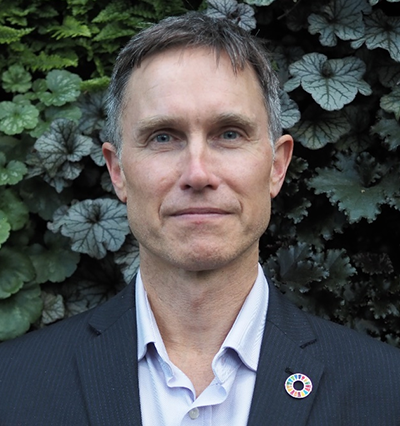
Dr Phillip Gould
Deputy Australian Statistician, Australian Bureau of Statistics
Kipling Zubevich
Chief Executive Officer of the Social Research Centre
Abstract
Ten years of behavioural insights in Australia have largely settled the method debate – well-designed behavioural research works! What remains unsettled is measurement: not the instruments we use, but the sources we draw on and how rarely they connect to one another. Every source is a partial measure. Administrative data records what happened, but seldom why, or what the impacts were. Surveys capture intention and recalled behaviour, but these are imperfect proxies for what people actually do. Demographics describe a person “from the outside”, but do not explain the whole person. Devices and apps capture behaviour at a granular level, but the “big picture” is rarely clear.
This session sets out a simple framework for integrating the measures we hold about people: attributes, circumstances, behaviour, reasons and response. The meaning lies in the interactions between these measures, with each source supplying the context the others lack. This is why data integration is the critical enabler, and how it can strengthen the evidence base behavioural economics depends on. Our presentation will explore the possibilities of unit-record-linkage between survey data and ABS’s Person Level Integrated Data Asset (PLIDA). Phillip and Kipling will present case studies on recent and upcoming work and illustrate how this integrated data can shed new light on societal dynamics. Finally, they will briefly share a few other innovative data collection case studies (including a cognitive experiment on AI reliance embedded in a traditional survey, and a travel survey capturing trip purpose augmented by GPS data) to show how the generation of evidence is changing, and where it goes next.
About the presenters
Dr Phillip Gould
Dr Phillip Gould is the Deputy Australian Statistician leading the Data Services, Infrastructure and Methods Group at the Australian Bureau of Statistics (ABS). He joined the ABS in September 2024 from the Department of Health and Aged Care, where he was the Chief Data Officer and First Assistant Secretary for the Health Economics and Research Division. Phillip has worked across the private, university and government sectors, including at the Department of the Prime Minister and Cabinet with roles in the COVID-19 response taskforce and in establishing the Office of the National Data Commissioner, and previously at the ABS where he helped establish the ABS’s data integration program.
Phillip holds a PhD in Time Series Econometrics and has spent much of his career championing the use of data to inform important decisions.

Kipling Zubevich
Kipling Zubevich is Chief Executive Officer of the Social Research Centre, Australia's largest agency dedicated to social research and evaluation. He joined the Social Research Centre in 2024, prior to which he was Chief Executive Officer of commercial research agency DBM Consultants. Kipling has held customer strategy and marketing leadership roles at NAB and has worked in the strategy consulting and university sectors.
Kipling holds a Master of Environmental Science alongside qualifications in electrical engineering and strategic foresight and is particularly interested in the role of data integration in public policy development.

Dr Karen Tindall
Principal Advisor at the Behavioural Insights Team Australia
Dr Alex Gyani
Managing Director of the Behavioural Insights Team Asia-Pacific
Abstract
Karen and Alex will reflect on the evolution of behavioural insights in Australia through two questions: what has the field learned, and what has the field forgotten? The first behavioural science units were forged in the time immediately after the Global Financial Crisis, which sharpened their sense of where they can have the most impact. This part of the BI story is often forgotten in Australia, which thankfully avoided a recession at the time. Since the GFC, the field has learned how to tackle complex systems, understand the replication crisis and address policy issues that were largely unimaginable at the field’s genesis. If Australia is going to meet the challenges of constrained budgets and emerging polycrises, it will need behavioural science to help governments to use its full toolkit.
About the presenters
Dr Karen Tindall
Dr Karen Tindall is a Principal Advisor at the Behavioural Insights Team Australia. Based in Canberra, she has worked at BIT since 2015. Her current work focuses on gender, community resilience, and online harms. Karen has a PhD in Political Science from the Australian National University. Her doctoral research examined public sector crisis management. Before she joined BIT, she was a postdoctoral research fellow at the ANU Research School of Psychology. There, she specialised in the social identity approach to behaviour change. She has published in social psychology, public policy, crisis management, and leadership.

Dr Alex Gyani
Dr Alex Gyani is Managing Director for BIT APAC. He has been based in Sydney since 2014 and leads the team’s research and advisory work across the region. Since joining BIT in 2012, Alex has worked in a diverse set of fields from domestic violence, energy regulation, health system efficiency, obesity, financial regulation, employment services to education. His PhD focused on encouraging people with anxiety and depression to seek treatment using a mobile phone app and encouraging psychological therapists to use evidence-based treatments. In 2024, Alex was awarded the Australia & New Zealand Society of Evidence Based Policing’s Operational Impact Award.